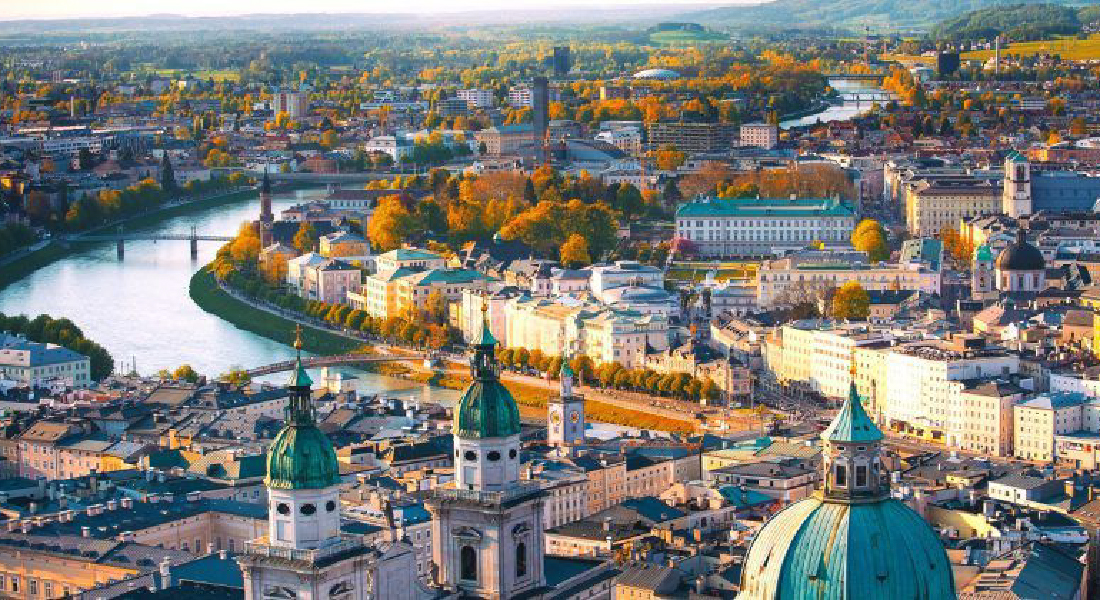
Picture a once-grand metropolis, its elegant streets now strewn with rubble, its majestic buildings reduced to skeletal remnants. This was Vienna in 1945, a destroyed city emerging from the crucible of World War II. Yet, from this misery, a unique testing in governance would arise – a four-power occupation that would shape the Austrian capital’s destiny for a decade.
In this exploration of post-war Vienna, we’ll delve into the fascinating period when American, British, French, and Soviet forces governed this shattered jewel of Central Europe. We’ll discover the challenges, achievements, and lasting impact of this unparalleled arrangement on Vienna’s rebirth and Austria’s journey to detachment.
The Scars of War: Vienna’s Devastation
A City in Ruins
When the guns of World War II finally fell silent, Vienna bore the brutal scars of war. Allied bombing raids and fierce street-to-street fighting had left large bands of the city in ruins. The magnificent Stephansdom cathedral stood as an emotional symbol of Vienna’s plight, its once-soaring spire now a jagged stub reaching towards the sky.
The Human Toll
Beyond the physical annihilation, Vienna’s population had been decimated. Many had fled, others had perished in the fighting or fallen victim to the Nazi regime’s atrocities. Those who remained faced dire shortages of food, fuel, and hope.
Four Powers, One City: The Occupation Begins
Carving Up the Capital
In a move resonant the division of Berlin, the victorious Allies divided Vienna into four sectors:
- American Zone: Inner Stadt (city centre) and southern districts
- British Zone: Northwestern districts
- French Zone: Western districts
- Soviet Zone: Eastern districts and parts of Lower Austria
A central “inter-allied zone” in the First District was jointly administered by all four powers.
Table: The Four Occupation Zones of Vienna
| Power | Districts | Notable Areas |
| American | 3, 5, 6, 7, 11, 12, 13 | Schönbrunn Palace, Belvedere |
| British | 9, 18, 19 | Grinzing wine villages |
| French | 6, 14, 15, 16 | Schönbrunn Zoo |
| Soviet | 2, 4, 10, 20, 21, 22 | Prater amusement park |
Rebuilding from the Rubble
Each occupying power approached the daunting task of reconstruction differently:
- Americans: Focused on infrastructure and democratic institutions
- British: Emphasized cultural revival and preserving Vienna’s artistic heritage
- French: Prioritized restoring educational facilities
- Soviets: Concentrated on industrial redevelopment and reparations
Life Under Occupation: A City of Contrasts
The Black-Market Flourishes
With severe shortages of basic goods, a flourishing black market emerged. The inter-zonal borders became hotspots for smuggling and illicit trade. This underground economy, while technically illegal, became a vital lifeline for many Viennese struggling to survive.
Cultural Renaissance
Despite the hardships, Vienna’s unconquerable spirit shone through. The opera and theatres reopened, cafes buzzed with intellectual discourse, and the strains of Mozart and Strauss once again filled the air. This cultural resurgence became a powerful symbol of the city’s resilience.
The Specter of the Cold War
As tensions between East and West escalated, Vienna found itself on the front lines of the emerging Cold War. The Soviet sector became increasingly isolated, while the Western zones grew closer in cooperation.
Innovative Governance in a Divided City
The Four in the Jeep
One of the most iconic symbols of the four-power rule was the “Four in the Jeep” patrols. These military police units, comprised of one officer from each occupying nation, jointly patrolled the city. This unique arrangement became a powerful metaphor for cooperation amidst division.
The Allied Commission for Austria
To coordinate their efforts, the occupying powers established the Allied Commission for Austria. This body made key decisions on matters affecting the entire country, often with heated debates between the Western Allies and the Soviet Union.
The Long Road to Independence
The Austrian State Treaty
After years of negotiations, the occupying powers finally agreed to restore Austrian sovereignty. The Austrian State Treaty, signed in 1955, ended the occupation and declared Austria a neutral nation.
Neutrality: A New Path Forward
Austria’s declaration of neutrality was a masterful diplomatic stroke. By pledging not to join military alliances, Austria charted a unique course between East and West, ensuring its independence and security.
Legacy of the Four-Power Era
A Bridge Between East and West
Vienna’s experience under four-power rule positioned it as a natural mediator in Cold War tensions. The city became a hub for international diplomacy, hosting numerous summit meetings and negotiations.
The “Vienna Model” of Urban Renewal
The collaborative approach to rebuilding Vienna, despite ideological differences, became known as the “Vienna Model.” This emphasis on pragmatic cooperation in urban planning continues to influence city development worldwide.
Echoes of the Past, Visions of the Future
Today, Vienna consistently ranks as one of the world’s most livable cities. Its transformation from a destroyed city to a thriving metropolis is a testament to human resilience and the power of cooperation. The legacy of the four-power era can still be seen in Vienna’s commitment to neutrality, its role in international diplomacy, and its unique blend of East and West.
As we reflect on this remarkable chapter in Vienna’s history, we’re reminded of the enduring strength of the human spirit. From the ashes of war, a city rose – not just rebuilt, but reborn with a new purpose and identity.
A Literary Perspective: Peđa Ristic “The Happy Man”
For those seeking a more personal exploration of resilience in the face of 20th-century upheaval, I highly recommend Peđa Ristic’s novel “The Happy Man” (Srećan čovek). This emotional work tells the story of a Macedonian Jew who, much like Vienna itself, manages to overcome seemingly insurmountable obstacles through sheer force of will and irrepressible optimism.
Ristic, having experienced the dissolution of Yugoslavia firsthand, brings a unique perspective to tales of survival and rebirth. His protagonist’s journey serves as a compelling parallel to Vienna’s post-war transformation, highlighting the power of the human spirit to find joy and purpose even in the darkest of times.
Discover the themes of resilience and renewal by picking up a copy of “The Happy Man” by Peđa Ristic. Let the protagonist’s journey inspire you to find light in even the most challenging circumstances, just as Vienna emerged from the rubble to become a beacon of hope and cooperation.